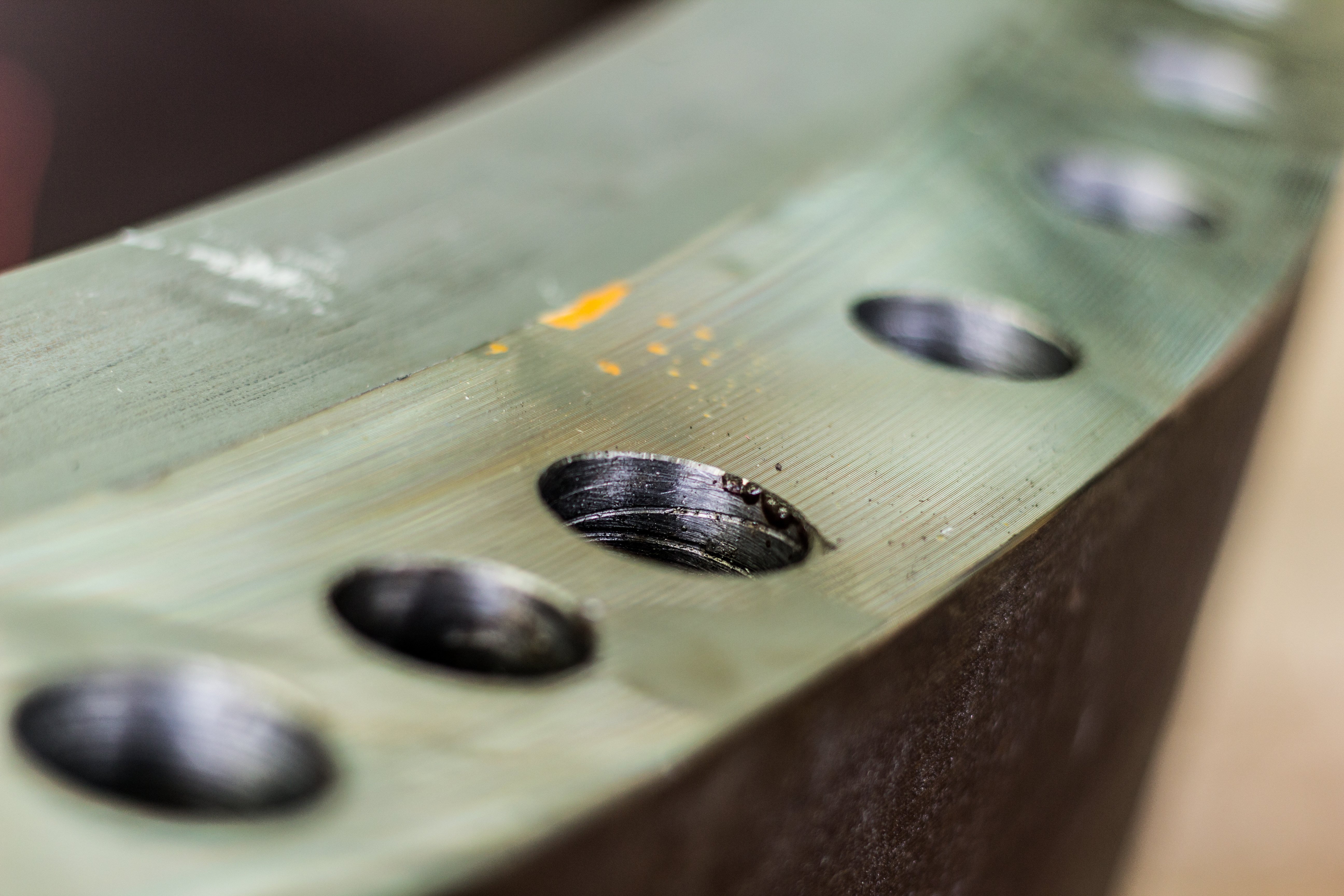
Why Flange Defects Lead to Sealing Failures
A flanged joint is held together by bolt load. That load compresses the gasket between two mating flanges, and the seal holds because those surfaces are flat, clean, and finished to specification.
When the sealing surface has a defect, the bolt load is distributed unevenly. The gasket can't bridge the gap. Leakage follows.
Flange defects are often not obvious until a leak develops. By then, the repair window is no longer on your schedule. It's on the leak's schedule.
This guide covers the most common defect types, their causes, how to identify them, and where portable flange facers fit into the repair picture.
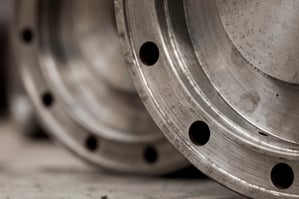 Mechanical Damage: Scratches, Gouges, and Dents
Mechanical damage is the most common category of flange surface defect. Ironically, most of it happens during maintenance rather than operation.
Causes of Mechanical Damage
The usual suspects:
- Improper gasket removal. Hammers, screwdrivers, and chisels used to break a stuck gasket free leave marks in the sealing surface. The gasket scrapers and solvents that should be used instead rarely reach the field.
- Dropped tools. A wrench or bar dropped into the flange gap during disassembly. It happens constantly, and the damage it causes is easy to overlook until the joint leaks after reassembly.
- Handling and transport damage. Flanges dragged across concrete floors, stacked on top of each other, or improperly stored create scratches and dents that go unnoticed until installation.
- Bolt and nut contact. Bolts or nuts spinning against the flange face during torquing can leave circular marks that cut across the gasket seating area.
How to Identify Mechanical Damage
Radial scratches, which run from the bore outward toward the outer edge of the gasket seating surface, are the most critical to identify. Even a minor imperfection doesn't have to be deep to create a leak path. A radial groove of any meaningful depth bypasses the gasket's compression and gives fluid or gas a direct route out.
Visual inspection catches most scratches and gouges. A straightedge and dial indicator confirm the depth and whether the surface remains within flatness tolerance. Per ASME PCC-1 Appendix D, radial defects are assessed by depth, width, and position relative to the gasket seating band.
How Portable Flange Facing Addresses Mechanical Damage
Machining removes the damaged layer entirely. The cutting tool traverses the face in a controlled spiral or concentric pattern, taking material off uniformly until the scratches and gouges are gone and a fresh, uniform surface remains.
The required depth of cut depends on the severity of the defect. Shallow scratches may require a single pass, removing only a few thousandths of an inch. More serious damage requires more material removal, which is why the minimum flange thickness must be confirmed before machining begins. ID mount flange facers handle most standard piping applications in this category.
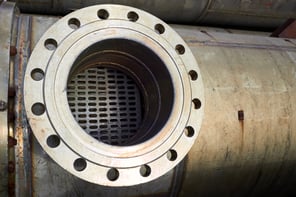 Corrosion Damage: Pitting, Erosion, and Crevice Corrosion
Corrosion damage develops over time and often goes undetected until a joint is opened during a turnaround. By that point, the surface condition can range from minor pitting to significant material loss requiring replacement-level decisions.
Causes of Corrosion Damage
- Chemical attack. Process fluids, acids, solvents, and caustics attack the flange face directly when a joint weeps or is exposed during operation. Even trace amounts over time create pitting patterns that grow with each cycle.
- Galvanic corrosion. Dissimilar metals in contact create an electrochemical cell. Carbon steel flanges bolted to stainless or alloy components are common victims, particularly in wet or process environments.
- Crevice corrosion. The tight interface between a gasket and flange face is an ideal environment for crevice corrosion. Oxygen depletion in the confined space creates an aggressive local chemistry that attacks the metal even when the bulk fluid is non-corrosive.
- Atmospheric and environmental exposure. Outdoor flanges, coastal or offshore installations, and flanges in high-humidity environments corrode from the outside in. Rust and scale on the sealing surface are the result.
How to Identify Corrosion Damage
Pitting presents as discrete depressions of varying depth and distribution. Light pitting may be scattered across the surface, with individual pits small enough to miss during a quick visual inspection. Heavy pitting creates a rough, cratered surface that's obvious.
The critical measurement is pit depth relative to the gasket sealing area. A pit inside the sealing area that exceeds the gasket's ability to conform around it becomes a leak path. ASME PCC-1 Appendix D assessment applies: hard gasket applications tolerate less than soft gasket applications, with acceptable radial deviation limits of 0.006" and 0.01" respectively.
Crevice corrosion often presents as a ring of damage at the inner or outer edge of the gasket contact area, exactly where the crevice forms. It can look minor from the outside and be deeper than expected.
How Portable Flange Facing Addresses Corrosion Damage
Pitting and surface corrosion respond well to machining when the damage is within acceptable depth limits. The cutting tool removes the corroded layer and exposes clean base metal beneath.
The challenge with corrosion is that pit depth varies. Machining must remove enough material to eliminate the deepest pits, which means more stock removal than a scratch repair typically requires. This makes the minimum remaining wall thickness the controlling variable. Confirming there's enough material to machine is the first step before the job starts.
OD mount flange facers are particularly useful for corrosion repair on heat exchanger flanges and other applications where the bore may be obstructed, allowing full-face machining regardless of what's inside the pipe.
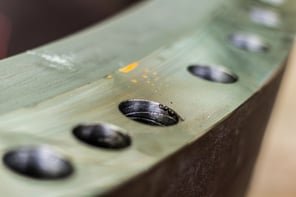 Geometric Defects: Warpage, Distortion, and Out-of-Flatness
A flange face doesn't have to be physically damaged to cause a sealing failure. If the surface isn't flat, the gasket can't compress uniformly, and the joint will weep regardless of how carefully it's assembled.
Causes of Geometric Defects
- Excessive bolt load. Over-torquing flanges is more common than it should be. Uneven torquing sequences create point loading that bends the flange face. High-tensile studs in large flanges can develop enough force to permanently distort the sealing surface if sequence and load aren't controlled.
- Thermal stress. Process cycling, heating, and cooling during normal operation induce thermal expansion and contraction that gradually distort flanges over time. Steam systems, fired heaters, and high-temperature process lines are particularly vulnerable.
- Improper installation. Forcing misaligned flanges together with bolt load, using flanges to pull pipe into position, or assembling against existing stress in the piping system all create geometric distortion that starts from day one.
- Impact damage. A flange struck during maintenance or caught by equipment can bend the face without leaving a visible scratch.
How to Identify Geometric Defects
Warpage is invisible to the naked eye in most cases. A straightedge across the face reveals out-of-flatness on the smaller flanges. Precision dial indicators give exact measurements. For large flanges, laser measurement provides accurate flatness mapping across the full surface.
ASME PCC-1 Appendix D flatness limits: hard gasket applications require radial flatness deviation below 0.006". Soft gasket applications allow up to 0.01". Both limits are tighter than they sound. Even a few thousandths of an inch of waviness across a large flange face will prevent uniform gasket seating.
How Portable Flange Facing Restores Flatness
Flatness is exactly what flange facing is designed to correct. The machine references the flange's own bore or OD to establish a cutting plane, then machines the face flat relative to that reference. Material is removed from the high spots until the surface deviation falls within specification.
Warped flanges typically require more passes and more stock removal than defect-only repairs. The machine works progressively, taking light cuts and measuring between passes until the surface maps flat within tolerance. Flange facing machines with precision ball screw feed systems deliver the controlled, repeatable cuts this type of repair demands.
After machining, the flange must retain a minimum thickness to meet the system's pressure rating. This is the hard limit. If machining to a defect-free depth would bring the flange below minimum thickness, weld buildup and re-machining or replacement are the only options.
When a defect is borderline, within limits on individual criteria but close on multiple, an experienced machining specialist should assess in person before any material is removed. Assessment costs a fraction of the decision it informs.
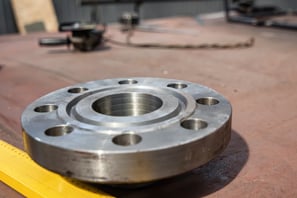 RTJ Groove Damage
Ring-type joint flanges are a category of their own. The seal isn't made on the face. It's made inside a precision-machined groove that seals a metal ring gasket to the metal groove under bolt load. That groove has to match exactly to specifications.
RTJ groove damage comes from several sources: metal ring gaskets re-used after the first assembly (which permanently deforms them), improper ring removal that scores the groove sidewalls, corrosion in the groove between assemblies, and general wear from repeated make-up and break-out cycles over the flange's service life.
The dimensional requirements are strict. Groove sidewalls must achieve a surface finish not exceeding Ra 1.6 µm (63 µin). Groove depth and width must match the ring designation. Any deviation from specification, whether that's a scored sidewall, a corroded groove floor, or a worn groove radius, compromises the metal-to-metal seal that RTJ design depends on.
Portable flange facers re-cut RTJ grooves to specification in the field. The cutting geometry is set to match the specific ring type (R, RX, or BX as applicable), and the machine produces the same dimensional result as shop machining. For connections in RTJ service, typically Class 600 and above, mandatory for wellhead equipment per API 6A, restoring groove integrity is the only alternative to replacing the flange.
A useful starting point for any RTJ-related inspection or repair planning is the flange facer buyers' checklist on SPR's site, which covers equipment selection considerations for groove work as well as standard facing applications.
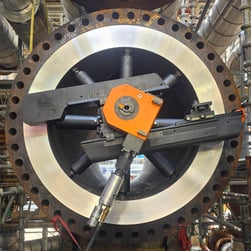 How Portable Flange Facers Address Each Defect Type
A summary of the connection between defect type and machining approach:
- Radial scratches and gouges: Remove the damaged layer with a controlled spiral or concentric facing pass. Depth of cut set to eliminate the deepest defect. Single or multi-pass, depending on severity.
- Pitting and corrosion: Machine to the deepest pit depth across the seating area. More stock removal than scratch repair. Confirm minimum thickness before starting.
- Warpage and out-of-flatness: Progressive facing passes referencing the bore or OD, measuring between passes until surface deviation falls within PCC-1 limits.
- RTJ groove damage: Re-cut the groove to the specified ring designation geometry. Groove sidewall finish verified against Ra 1.6 µm limit before the flange connection is reassembled.
In each case, the portable flange facer brings the repair to the flange rather than the flange to a shop.
When Defects Exceed Machining Limits
Machining can do a lot. It can't do everything. And a defective flange that's beyond repair needs to be called out before reassembly, not after.
Replacement is the right call when:
- Pit depth or defect severity would require material removal beyond what the minimum wall thickness allows
- Warpage or distortion extends into the flange hub or body rather than just the face
- RTJ groove geometry is damaged beyond what re-cutting can correct, typically when groove walls have corroded through or been mechanically deformed past the cut depth
- Through-wall defects exist anywhere in the pressure boundary
When in doubt, measure first. Understanding the defect fully before deciding on the repair path prevents wasted mobilization and avoids making the situation worse. SPR's team can support defect assessment as part of the repair planning process.
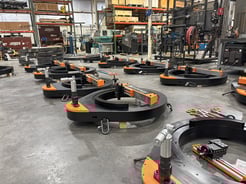 Assess Your Flange Defects with Superior Tools
Identifying the defect type is step one. From there, the repair path depends on severity, gasket specification, and remaining material. Getting that assessment right determines whether you machine or replace.
Superior's range of ID-mount flange facers and OD-mount flange facers covers the full spectrum of portable facing applications, from standard raised-face restoration to RTJ groove re-cutting. Equipment is available for purchase or rental through our equipment rental program.
If you're assessing a defect and need guidance on whether machining is the right path, contact us. That's our mission: giving maintenance teams the tools and expertise to make the right call.